






Juliette Bretan argues that weakening Polish support for Ukraine could become a serious strategic problem for Kyiv and Europe.
Four years after Russia’s full-scale invasion of Ukraine, Western interest in supporting the Ukrainian war effort is fading. News from the front line now rarely reaches Western headlines, and military aid, especially from the U.S., is diminishing. U.S. military help to Ukraine fell by 99 percent in 2025, compared with the annual average for 2022-2024, according to the Kiel Institute’s Ukraine Support Tracker.
Yet recent months have seen a far more dangerous threat emerge for Kyiv–and one closer to home. Poland, Ukraine’s neighbor, was previously a stalwart supporter of the fight against Russia–partly due to its historical suffering, like Ukraine, under Russian domination. But as a result of a new right-wing president, unresolved wartime tensions, an economic downturn, and Russian disinformation, Polish aid for Ukraine is rapidly waning.
Szlifuj angielski z Newsweek Learning English
Foto: materiał promocyjny
It comes at a disastrous time. With Vladimir Putin’s announcement on May 9 that the war with Ukraine may be „coming to an end,” war fatigue—especially by Ukraine’s neighbors—would lower their bargaining power at the negotiation table. As Poland has so far been a link between Kyiv and the West, this fraying of relations might lead to issues with future plans for defense in Ukraine, as well as its relation to the EU and NATO.
In the last few months, social and economic tensions between the two countries have already had an impact on security and solidarity. Poland’s infrastructure is vital for the supplies of military and humanitarian aid for Ukraine. The country is the route for 90 percent of military equipment for Ukraine, and is home to NATO bases and centers, as well as complexes in the east, near the border with Ukraine, and in the northern port, Gdynia.
Yet in 2024, friction over the cheap price of Ukrainian grain sent to the EU market, and the resultant stockpiling of grain in Poland, led to Polish farmers protesting around 180 locations across Poland, blocking roads and crossings into Ukraine. This had the effect of delaying the passage of some military support, including night-vision systems, pickup trucks, and drones. These tensions also prompted Russian social media accounts to spread disinformation about the protests to sow divisions between Poland and Ukraine. In June last year, IBRiS, a Polish research agency, stated that 46 percent of Poles support ending or limiting military aid to Ukraine.
At the negotiating table, the effects of these Polish-Ukrainian tensions might lead to more potential for Russian demands to be enforced, particularly over the occupation of Ukrainian land, given weakened European support would prevent Ukraine from being able to completely protect its territory. This would also have an impact on the defense capacity of NATO and the EU’s eastern flank. If tensions with Poland remain, Ukrainian dependencies on NATO and EU defense might also be more limited, potentially leading to a lack of security guarantees in order to prevent further Russian aggression.
Ukrainian hopes to join the EU and NATO would also come under pressure. In 2025, IBRiS also found that only 35 percent of Poles now felt their country should support Ukraine in its aim to join the EU—down from 85 percent in 2022.
Many cite historical tensions with Poland and Ukraine sharing a complex wartime history. In 1943, the Ukrainian Insurgent Army murdered between 50,000 and 100,000 Poles in Volhynia, now in western Ukraine, a region which had previously been part of Poland, and was at that time occupied by Germany. The massacres were likely in response to Polish repression of Ukrainians in the region in the interwar period, as well as Ukrainian nationalist efforts to form a Ukrainian state.
While Ukraine has recently allowed Poles to exhume mass graves in the region–which was historically banned by the country— tensions remain. Poland suggests Ukraine needs to first recognize the Volhynia act as a genocide before joining the EU.
Recently, Poland has also limited support for Ukrainian refugees. In 2022, the Polish government brought in waves of assistance and protection, permitting the vast number of Ukrainian refugees who fled their country in the wake of invasion and settled across the border to stay for over a year, and gain a resident permit for three years.
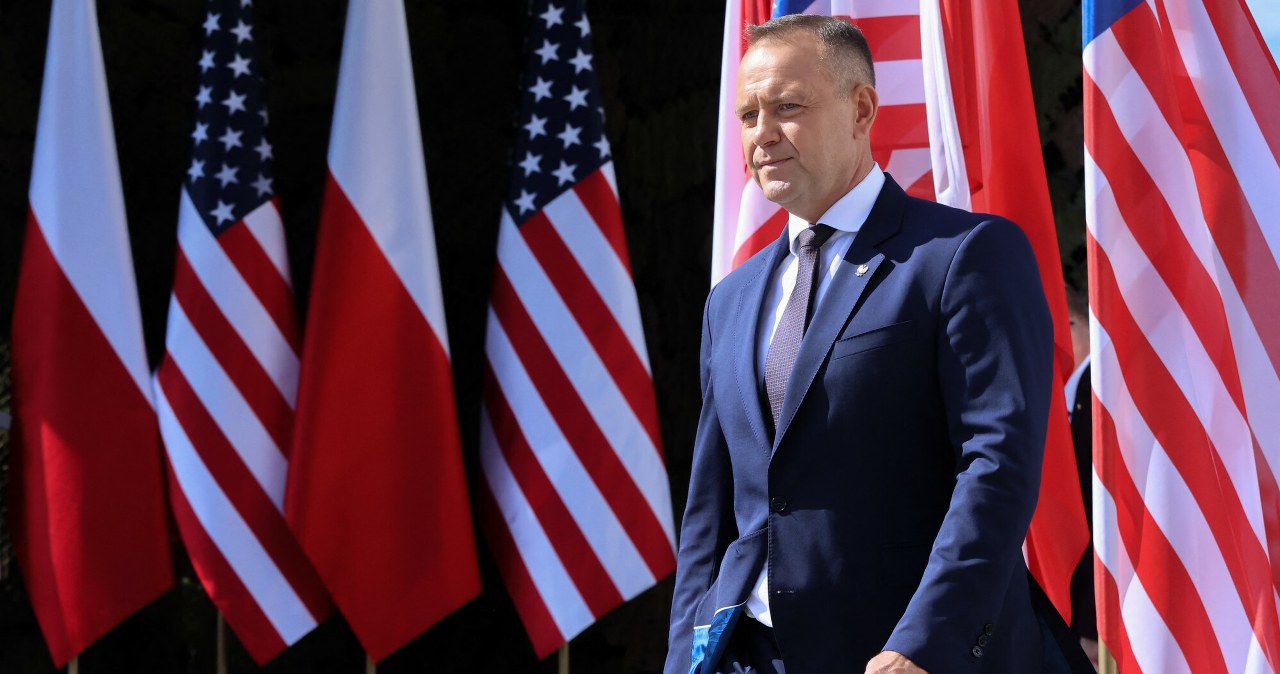
Yet following the election of right-wing President Karol Nawrocki in 2025, who stated he would put Poles first, the special support for Ukrainians appears to have ended. While the government claims this change is only the consequence of a more stable global situation, and means Ukrainians will be treated the same as other foreigners in Poland, it also points to a deterioration in relations between the countries.
Polish people’s support for refugees has simultaneously fallen, with the state research agency CBOS publishing a poll in January that showed the proportion of Poles opposing Ukrainian refugees was the highest ever recorded, at 46 percent. Such tensions would also limit Ukraine’s hand at negotiations and restrict their dependency and trust on the EU.
While Poland remains a supporter of Ukrainian independence, and defender against Russian aggression, this resurgence of strained relations —particularly after President Donald Trump’s withdrawal of support—risks not only damaging civil society, but also has consequences for military transportation, and EU or NATO political decisions.
With potential negotiations on the horizon, Poland’s relation with Ukraine will be vital to secure Ukraine’s security now and in the future. A new Polish disillusionment, rather than any U.S. limits to support, represents a larger issue for Ukrainians.
Juliette Bretan is a researcher and journalist, currently based in Cambridge in the U.K., who has written about Polish and Eastern European politics, culture, and history for a decade. The views expressed in this article are the writer’s own.

